

introduction
In an industry long driven by upfront costs and installation speed, a quiet shift is taking place. Owners, engineers, and contractors are looking beyond the spec sheet and asking a deeper question: what will this system cost to own, maintain, and support over the next 20 years?
This is lifecycle thinking—and it’s reshaping the way piping systems are designed, specified, and installed.


the real cost of a mechanical system
In facilities like hospitals, data centers, industrial plants, and multi-use buildings, piping infrastructure is not just a background utility. It’s the circulatory system of the entire operation. Downtime can mean lost revenue, failed compliance, or even compromised safety.
And yet, too many systems are still built around first cost only—ignoring the long-term implications of material performance, corrosion risk, component compatibility, and service access.
Here’s the reality: the true cost of a piping system is rarely reflected in the line-item material quote. It shows up later—in callbacks, maintenance contracts, labor downtime, and early replacements.
four drivers of long-term system cost
lifecycle-focused engineers and owners are increasingly factoring in the following:
material and corrosion behavior
not all metals are created equal. systems that combine incompatible metals can accelerate corrosion and scale buildup, leading to reduced efficiency and shortened lifespan. the wrong material in the wrong environment—especially in closed-loop or aggressive water systems—is a common failure point.

maintenance accessibility
valves and control points must be placed and selected with future serviceability in mind. it’s not just about whether a valve works on day 1, but whether it can be reached, operated, and replaced on day 3,650.

component interoperability
systems built with mixed vendors often introduce minor tolerances or installation nuances that add up—leading to installation slowdowns or performance inconsistencies. a single-source approach improves compatibility, training efficiency, and long-term part support.

thermal, pressure, and usage cycles
repeated thermal expansion, pressure changes, and daily cycling create wear patterns that only robust system design can withstand. choosing connection systems and valve technologies that account for stress relief and fatigue makes a significant difference over time.

the case for lifecycle-driven specification
when engineering firms or contractors bring lifecycle thinking into early design conversations, they aren’t just improving performance—they’re protecting the owner’s investment.
examples include:
prioritizing press systems in labor-constrained environments for fewer leak points and faster service
selecting high-performance elastomers or stem seals in hot water or glycol systems to reduce maintenance calls
designing valve placement with tagging and isolation strategies for efficient future shut-downs
these choices often come with a slightly higher initial price—but that premium pays back quickly when measured against service hours, unplanned shutdowns, or rework.
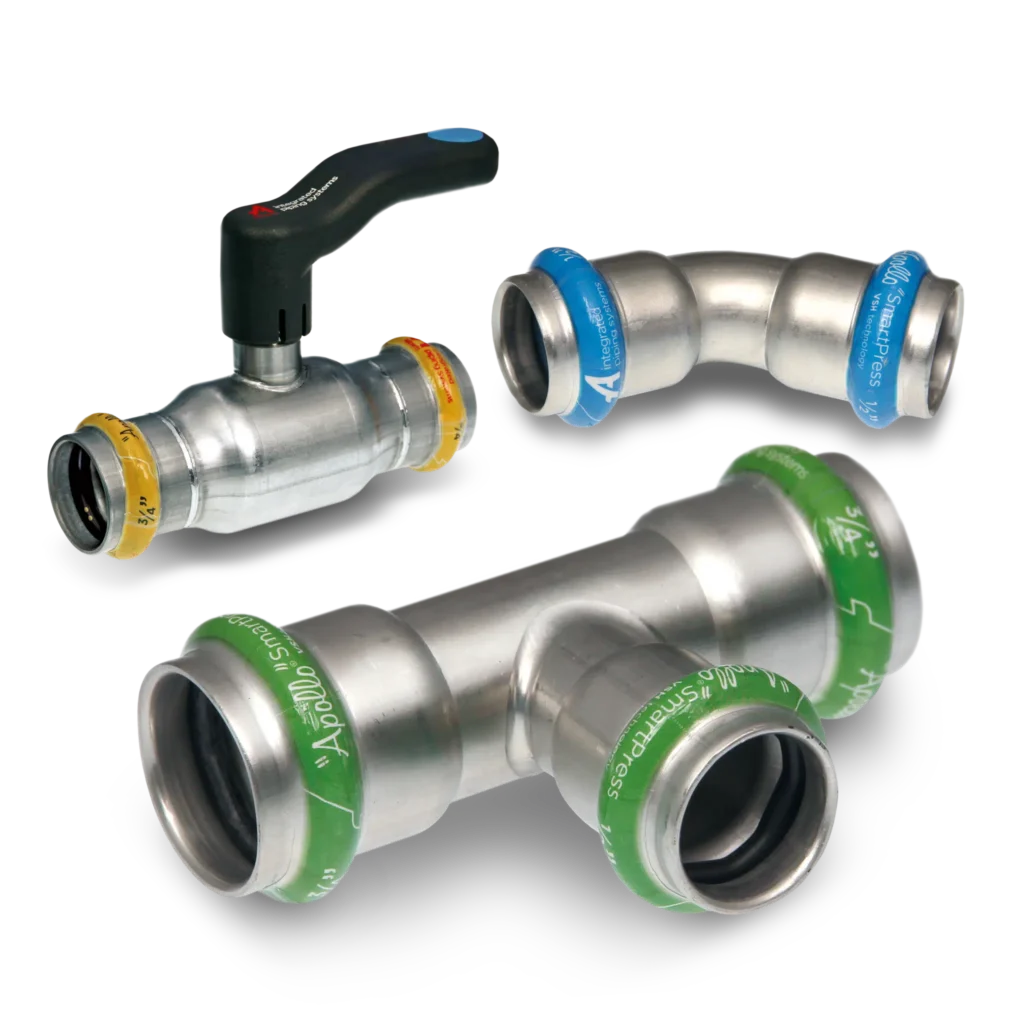


integrated systems: smarter by design
one key trend accelerating this lifecycle shift is the move toward integrated piping systems—where valves, fittings, connections, and accessories are designed to function together, often from a single provider.
this doesn’t just simplify procurement. it minimizes variation in performance, ensures consistent install quality, and improves lifecycle traceability across the building portfolio.
it also enables a more holistic approach to system health: fewer variables, better documentation, and a clearer path to digital twin integration and building lifecycle management platforms.
build it once. build it right.
the market is changing. building owners are asking harder questions. facility managers want fewer surprises. and specifiers are taking a longer view—balancing install speed with operational durability, and upfront cost with 10-year service budgets.
lifecycle thinking isn’t just a trend. it’s the new standard for smart infrastructure. and when piping systems are designed to last—not just to pass inspection—everyone wins.


